
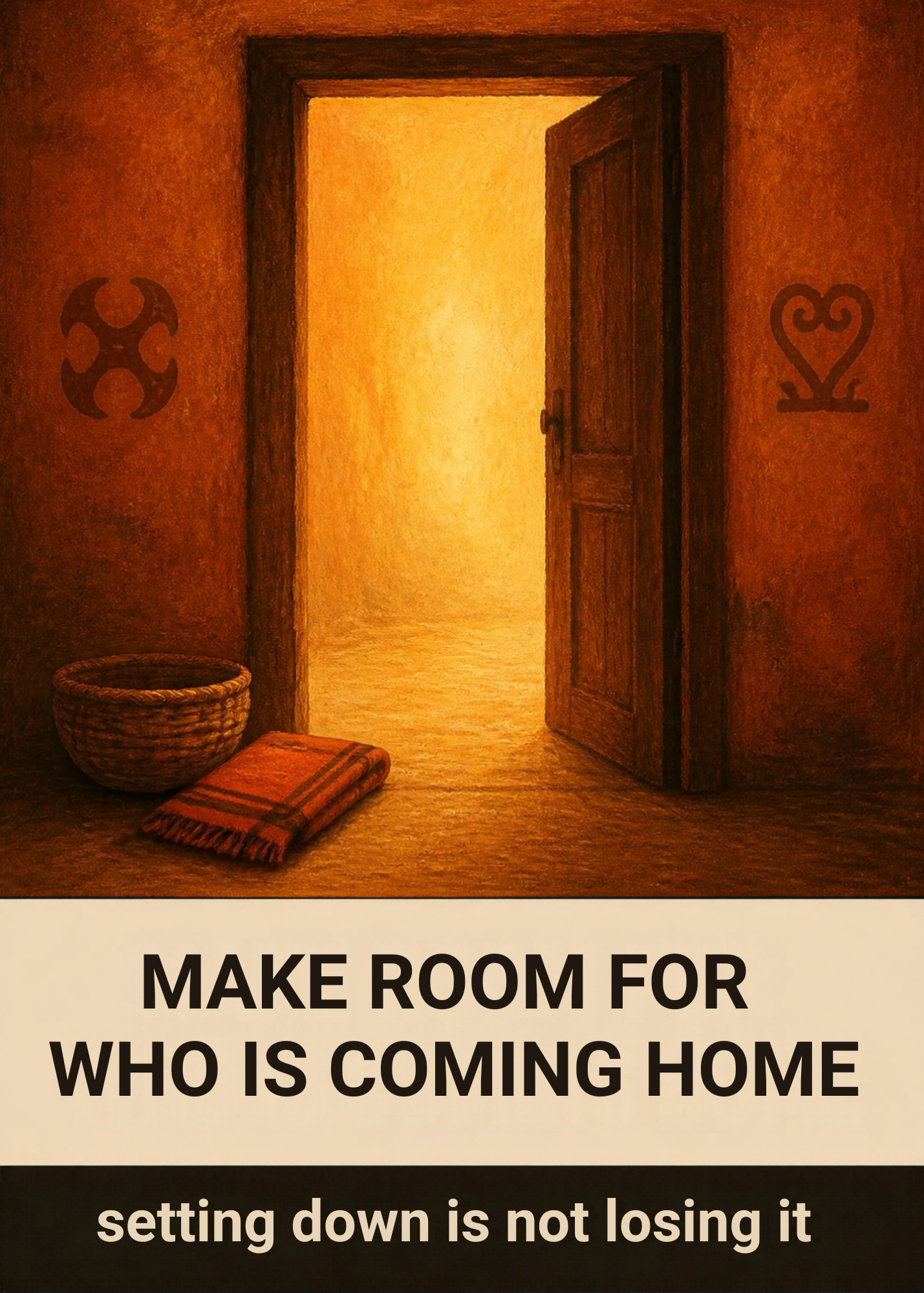
There is a belief, ancient and unshaken, that runs through Día de los Muertos: the dead are not gone. They are simply on the other side of a very thin curtain, and once a year, that curtain lifts. Marigolds are laid down like a path. Candles are lit like an invitation. Altars are built like an open door.
For those of us who carry the diaspora in our bodies, this holiday lands differently. We already know something about a thin curtain between the living and the ones who came before us. We already know what it is to carry people we never met in our blood, our rhythm, our resilience. Día de los Muertos didn’t teach us that truth. It simply gave it a shape.
What the Holiday Actually Is
Día de los Muertos (November 1st and 2nd, preceded by observances on October 31st) is not a Mexican version of Halloween, and it is not a somber occasion. It is a celebration—joyful, colorful, and deeply intentional—built around the belief that death is not an ending but a continuation of relationship.
- The ofrenda: A home altar built to welcome a specific person back—photographs, their favorite foods, marigolds (cempasúchil), candles, and often a path of petals leading to the door so their spirit can find the way home.
- The vigil: Families gather at cemeteries overnight, cleaning and decorating graves, sharing food, telling stories, sometimes with music. Grief and celebration exist in the same space, at the same time, without contradiction.
- The invitation: Unlike traditions built around fear of the dead, this one is built around welcome. The dead are guests of honor, not something to be warded off.
Why This Resonates So Deeply Here
At Black to Mexico, we talk often about remembering rather than escaping—about ancestral threads that were never actually broken, just waiting to be picked back up. Día de los Muertos gives that language a physical practice. It says: grief and joy can share a table. The people who came before you are not a closed chapter. You are allowed to set a place for them.
For many in the diaspora, ancestral connection has had to be reconstructed—records lost, names erased, lineages interrupted by forced migration. This holiday offers something rare: a living, unbroken tradition of staying in relationship with the dead, practiced openly, publicly, without shame.
What It Might Stir in You
If you find yourself moved by this holiday in your first year here, you are not alone, and you are not required to have it figured out. It’s common to feel:
- Grief you didn’t expect. Ancestors you never met, or ones you did and miss fiercely, may surface in ways that catch you off guard.
- A longing to build something of your own. Many people in our community begin their own small ofrenda practice—not to appropriate the tradition, but because it awakens something they already carried.
- Belonging in an unexpected place. A country that has, at times, felt foreign starts to feel a little more like home when you realize its most sacred holiday is about exactly what your own body already knows.
A Final Word: You Are Invited
You do not have to be Mexican to be moved by this holiday, and you do not have to build an elaborate altar to participate in its spirit. You only have to be willing to say a name out loud, to remember someone on purpose, to let grief and gratitude sit at the same table.
The dead are not gone. Neither is what they gave you. This month, we invite you to remember that on purpose.
Planning your move? Relocation is both practical and spiritual. Whether you’re crunching numbers or seeking clarity, I’d love to help you find your path. 👉 Book your free 30-minute consultation with Della 👉 Explore our free Wayfinder’s Toolkit
Leave a Reply
You must be logged in to post a comment.