
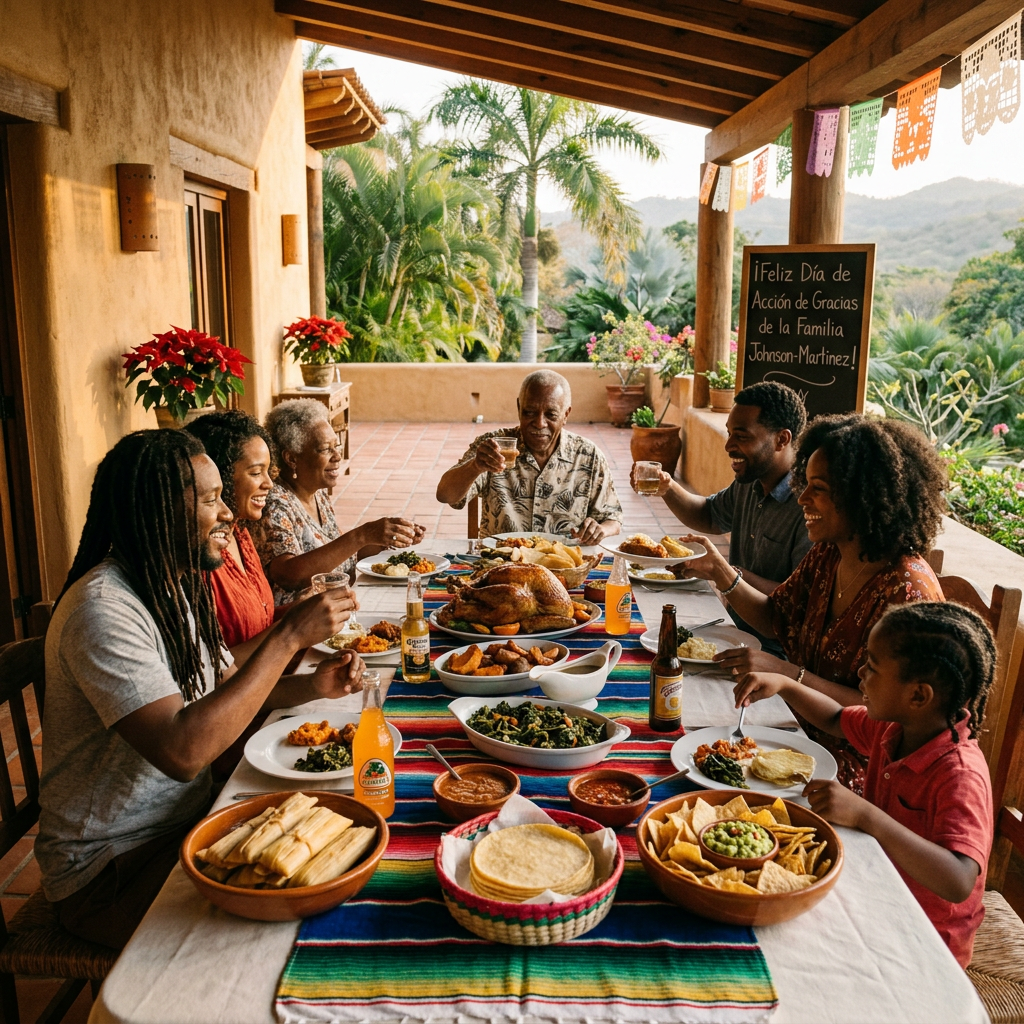

At some point this November, you are going to want to gather people around a table. Maybe it’s Thanksgiving. Maybe it’s just the ordinary hunger to not eat another meal alone in a new place. Either way, the instinct is the same: set the table, invite the people, see who shows up.
Here is how to actually do it, the first time, somewhere new.
Start smaller than you think
The mistake people make is waiting for the big gathering — the one with the full table, the right number of chairs, everyone you’ll eventually know. Don’t wait for that. Invite two people. Invite one. A table for three, built from scratch, teaches you more than a table for twelve you’re too anxious to actually host.
Say yes to hosting before you feel ready. Readiness is not a requirement. It’s a myth that shows up after you’ve already done the thing a few times.
What to do about the food
You will not find everything you’re used to. Accept that now, before you’re standing in an unfamiliar market feeling the absence of a specific ingredient like a small grief. Some substitutions will surprise you — a local ingredient that does the job better than the one you left behind. Some will just be different, and that’s allowed to be true without it meaning you failed.
Context first, then the plain steps: figure out what the dish actually needs to taste like itself — not which exact brand, which exact cut, which exact store. Ask a neighbor, a local market vendor, or a Facebook group for people relocating to or living where you are what they use instead. Cook the dish once before the day you need it, so the first time you’re troubleshooting a substitution isn’t in front of guests.
Who to invite, when you don’t have a list yet
The people you invite to your first table abroad are rarely the people you’ll be closest to a year from now. That’s fine. The first table is practice, not destiny.
Invite the neighbor whose name you finally learned. Invite someone from whatever group chat, meetup, or community space you’ve found so far, even if you’ve only met them once. Invite another immigrant who’s further along than you are — they remember what the first table felt like, and they’ll say yes more often than you’d expect.
Three small moves make a real difference: ask people what they’re free to bring, so the table becomes something built together instead of something you’re performing alone; tell people plainly that this is your first time hosting here, so nobody expects more polish than a first table actually has; and follow up afterward, even just a message saying you’re glad they came, because that’s often what turns one gathering into a second one.
What to expect
Expect it to feel smaller and quieter than the gatherings you left behind. That is not a failure of the gathering. That is just what a first table looks like, every time, for everyone who’s ever built one from nothing.
Expect at least one thing to go sideways — a dish that doesn’t turn out right, a guest who cancels last minute, a kitchen that isn’t set up the way yours used to be. Hold it loosely. The gathering was never really about the execution being perfect. It was about the table existing at all.
Expect to feel, at some point during the day, the specific ache of missing the people who would have been there if you hadn’t left. Let that ache sit at the table too. It belongs there as much as anything you cooked.
What to verify locally, before the day itself
A few practical things are worth checking in your own specific city before you commit to a date: whether the ingredients central to your dish are available in the days leading up to the gathering, since availability can shift around local holidays; whether any shops or markets you’re counting on keep different hours around that time of year; and whether the space you’re hosting in actually fits the number of people you’re inviting — better to find that out before the day than during it.
The real work underneath the hosting
Building a table in a new place is not really about the food, the chairs, or the exact right number of guests. It’s the same work as everything else on this path: believing you’re allowed to build something real here, before you have proof that you can.
You can. The table doesn’t need to be perfect. It needs to exist. Set it, invite someone, and let the rest follow from there.
Planning your move? Relocation is both practical and spiritual. Whether you’re crunching numbers or seeking clarity, I’d love to help you find your path.
👉 Book your free 30-minute consultation with Della
👉 Explore our free Wayfinder’s Toolkit
Leave a Reply
You must be logged in to post a comment.